
Vanners: the cloth from Sudbury
October 2026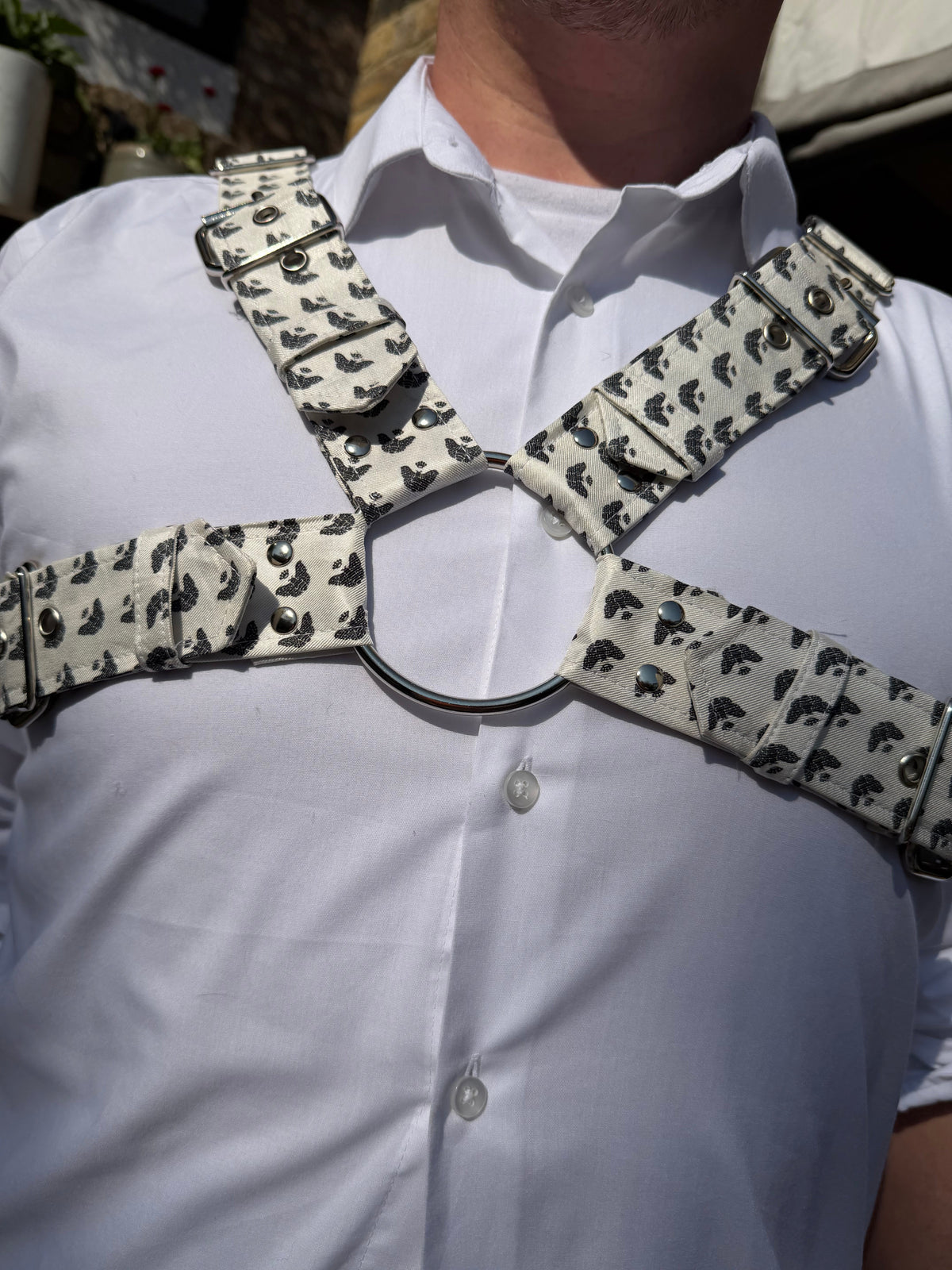
Sudbury has been weaving silk for almost three centuries. In the 1770s, when the Spitalfields Acts fixed weavers' wages in London, silk firms began moving out to the towns of Suffolk, and Sudbury became one of the places British silk was made. It still is.
Vanners traces its line back to the 1700s. For generations its looms served the neckwear trade: tie silks, foulards and regimental stripes, the cloth that sits folded in the drawers of good tailors and better-dressed grandfathers.
November 2020
In November 2020, after a difficult year made harder by the pandemic, the company went into administration and around half its staff were let go. Two months later it was bought and kept running under new ownership. The mill survived, and some of its old cloth found its way into the trade as deadstock.
That is how it reached Dalston Mill Fabrics in Hackney, where it was listed as Vanners deadstock. We bought what was on the bolt.
Three pieces
Three harnesses in the Alpha 30 Archive are cut from it.
Gold & Navy Preppy Stripe, H Harness. A deep navy ground with cabled white-gold verticals. From across a room it reads near-black. Up close, each stripe is a tiny twisted cable, raised slightly proud of the cloth.

Navy with Red Stripes, Y Harness. A regimental stripe at irregular intervals, the kind a club tie would recognise, worn open across the chest.

White Queen Bee, X Harness. Charcoal queen bees in a tight foulard repeat on a near-white silk twill. The X catches the grid on the diagonal.
From the throat to the chest
Tie cloth is made to be handled: knotted, pulled and worn every day. Every strap begins as a 6-inch-wide strip, folded down to a 1.5-inch finished reinforced strap, then hand-finished in East London on a Singer Heavy Duty 4423. The cloth keeps its character. It just sits somewhere new.
This is old stock. It isn't being re-sourced, and each configuration is made once.